Send Your RFQ to Synbase Steel
Prefer to send drawings, BOMs or attachment lists by email? sales@synbasesteel.com

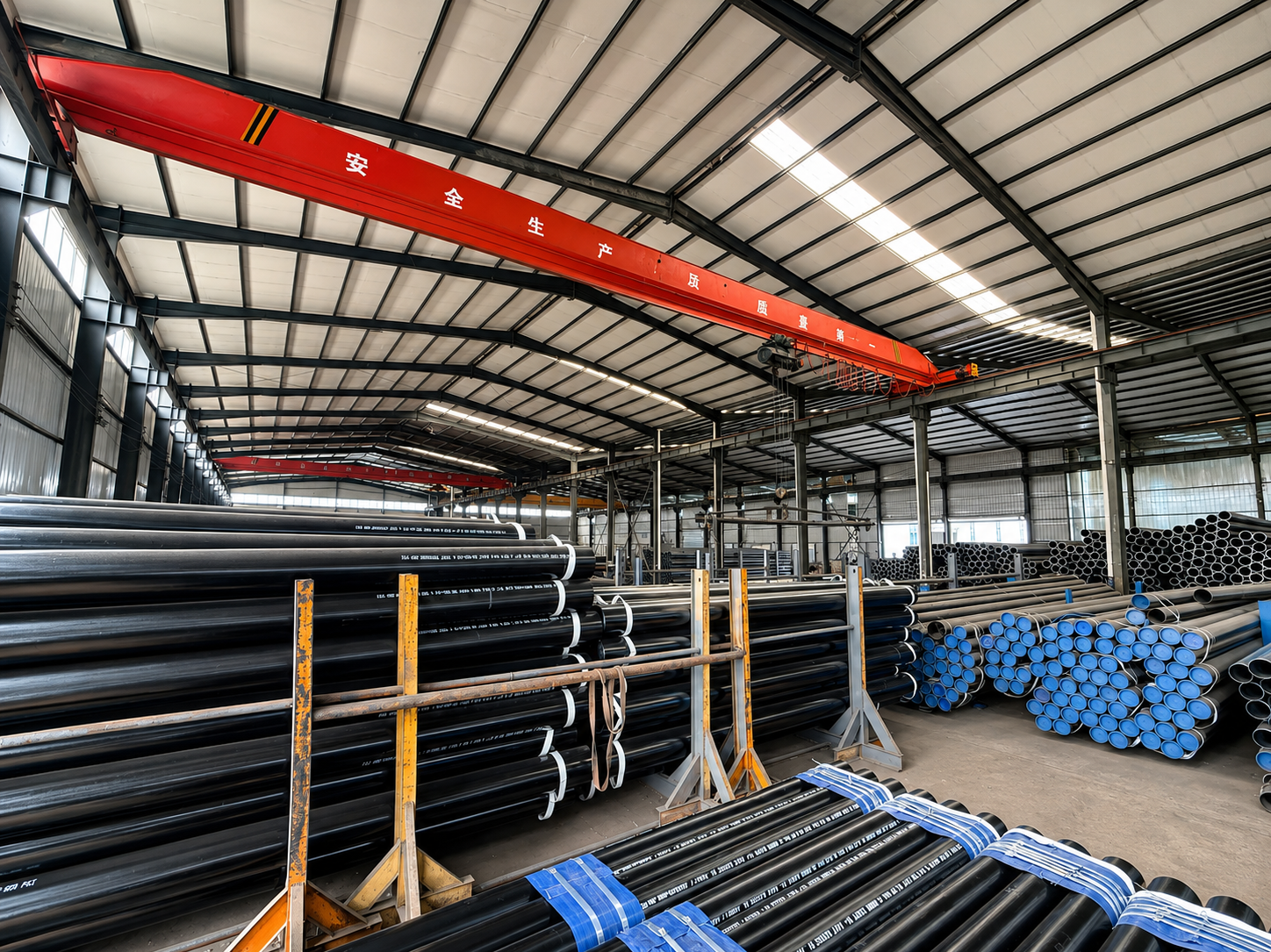
On a pipeline, refinery, or offshore package, the steel pipe and fittings rarely fail in service first – the sourcing fails first. Casing comes from one trader, line pipe from a second, flanges from a third, each lot showing a unique certificate format, its own heat numbers and a differing definition for “API 5L grade B”. Then if the third party inspection report turns up one mismatched mill test report, the whole shipment can be put on hold – and in an EPC schedule, idle labor, crane standby, and penalties add up to a sum approximating:
The real problem is Fragmentation: the multi-vendor chain creates zero accountability for grade, traceability or delivery across the entire pipe system. Synbase Steel eliminates it. carbon, stainless, or special-alloy pipe; the fittings that join it; and the flanges that terminate it are all fabricated and consolidated under one E-CHENG Steel Group supply system- the one system with one process of production, warehousing, transport, sales- so one heat-number and one set of papers trace and cover the entire delivery.
That’s what a steel pipe and fittings supplier built around energy projects rather than around stock-and-ship distribution is built to do. Unlike a distributor that forwards whatever certificate a trader has provided, a mill-direct supplier is the owner of the grade, the heat number and the schedule from melt to port. That is the honest difference a quote sheet never shows. Grades are specified to international standards such as: ISO 3183 the line-pipe equivalent of API 5L.
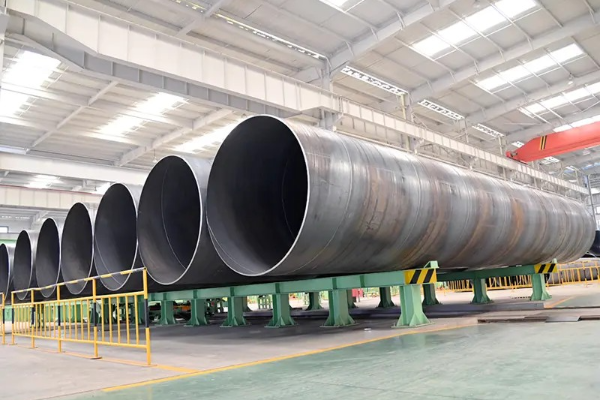
Each item type below is manufactured to the standard published, and shipped complete with the grade, dimensions and Certification details named in each card. Follow any category to access the full range, dimensional Tables, and grade Selector.
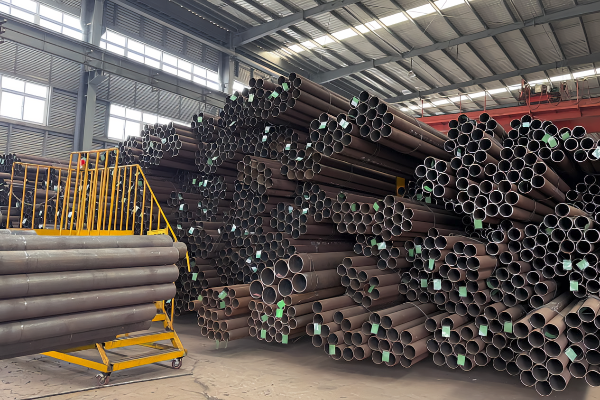
SMLS pipe is made by piercing a solid steel billet over a mandrel — with no weld seam — for top performance in high-pressure, high-temperature service.
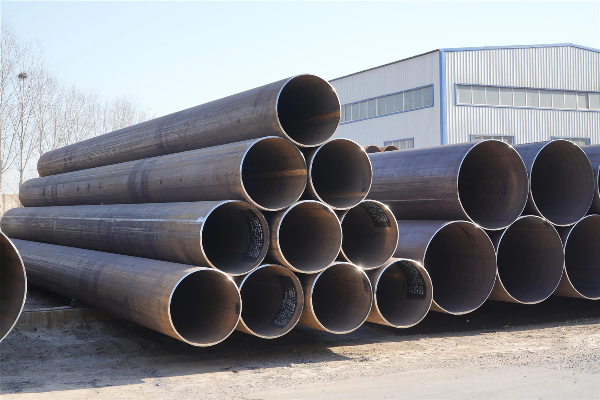
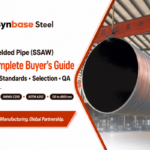
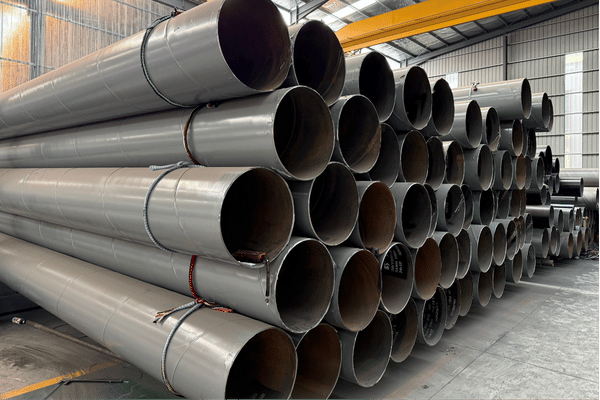
Welded steel pipe is made by forming flat plate or strip of steel and butt-welding its length-in either longitudinal or spiral weld- the only way to produce high-diameter pipes that solid-billet mills cannot produce.
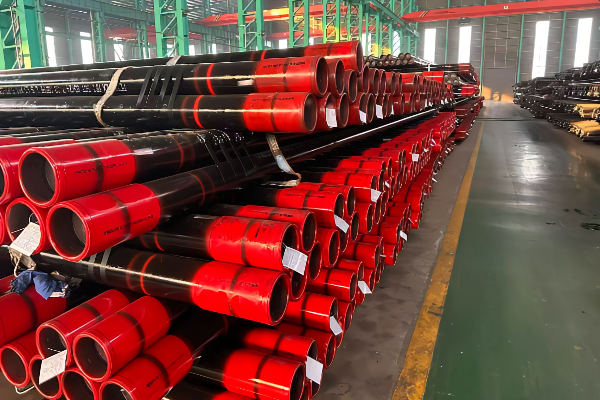
OCTG pipe, casing, tubing and drill pipe is a family of pipes which lines or produce oil & gas well – in accordance with API 5CT for pressures up to 15,000 psi.
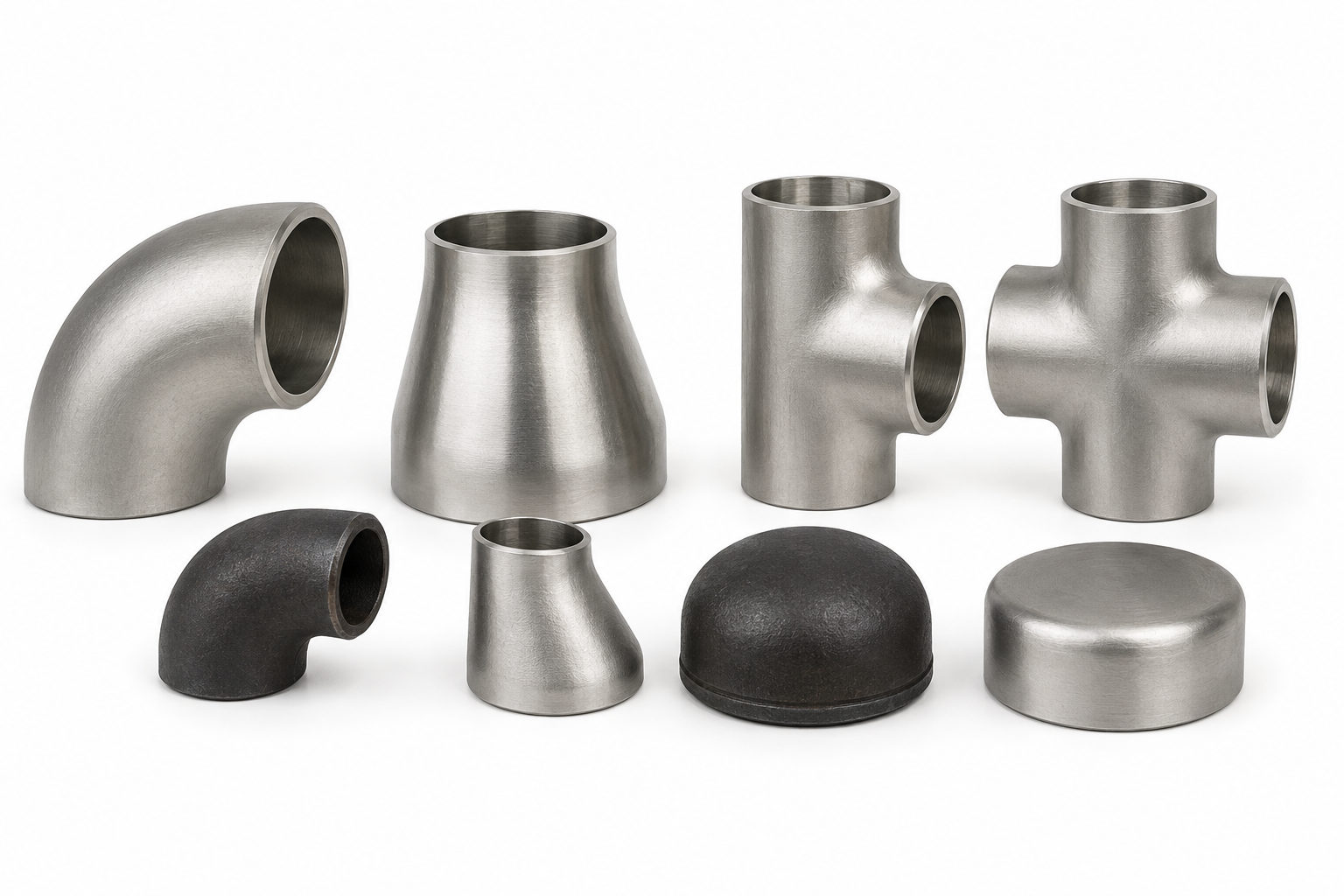
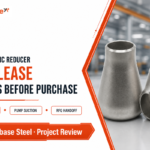
pipe fittings change the direction, the diameter, or termination of a pipeline by forming butt-weld and socket-weld connections to the exact specifications as the parent pipe in grade and schedule.
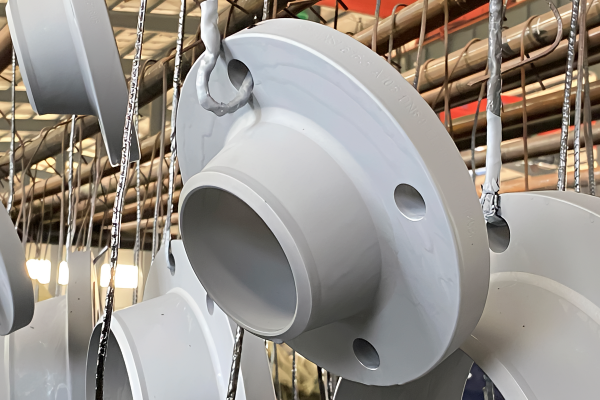
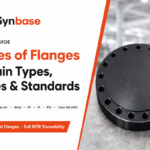
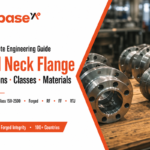
A flange fitting is used to connect pipe to pipe as well as to valves and to the equipment – it’s constructed with butt-weld and socket-weld connections according to specifications of ASME B16.5.
Unlike a distributor’s catalog, the entire Synbase range ships under one E-CHENG Steel Group quality system, with one heat-number trail and one set of mill test reports — whereas a multi-vendor buy leaves your inspector reconciling five separate document maps.
REQUEST FULL CATALOG →Where a project requires grades that lie outside the remit of our standard production – for high strength specialty alloy steels targeting extreme sour service or very low temperatures – we turn to longstanding supply alliances with Chinese producers like Baosteel, Tianjin pipe (TPCO), Ansteel, and TISCO (claimed) to turn the product out on an end-to-end basis.
A distributor’s catalog ends where its warehouse space does, but a mill’s expertise includes whatever it has learned to roll, pierce, weld, heat-treat. Which is why the first realistic question for any energy project is never “do you stock it” but “Which process handles my diameter and pressure profile?” Our four pipe-forming paths are non-exclusive and don’t cleanly stack or layer on one another: picking the wrong one is where projects quietly lose money.
| Process | OD range | Wall | Pressure class | Typical service |
|---|---|---|---|---|
| SMLS | 13.1–660 mm | 2–100 mm | Highest | HP/HT oil & gas, boiler, sour OCTG |
| ERW / HFW | 20–660 mm | 2–20 mm | Low–medium | Water, gas, structural, low-P line pipe |
| LSAW (JCOE) | 350–1500 mm | 8–80 mm | High | Large-diameter long-distance transmission |
| SSAW | 200–3500 mm | 5–25 mm | Low–medium | Water, low-P gas, piling, structural |
Product and process coverages according to the industry method, and for all diameter, pressure, material and application factors according to ASME B36.10M and B36.19M dimensional standards. In Synbase production all of this functionality cover carbon steel, stainless steel, and the high-spec specialty alloy steels, providing wide diameter and high-strength, thick-wall, and high-precision ranges from the respective group of companies.
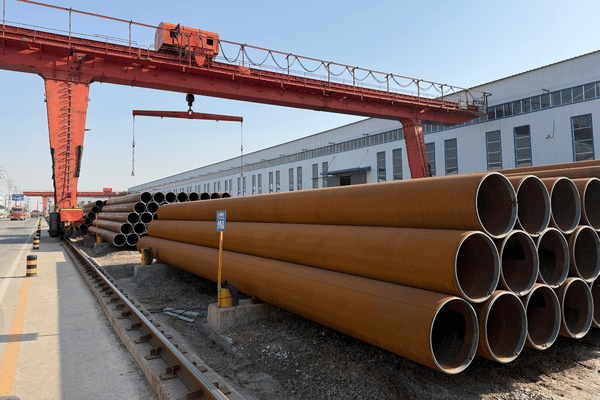
While most mills can achieve 16-20 OD with conventional solid-billet SMLS line pipe, beyond these diameters hot expanding is seldom competitive, and there’s no physical limiting factor on LSAW or SSAW product (anything up to ~3.5m OD); past these 20″-OD points welded pipe is often not a compromise — it is the only option that exists. That process direction is reversed in the sour and high-pressure service applications where a weld seam itself represents an inherent weak point. Both paths are on our catalog, so the service type and diameter –not the sales pitch — determines your selection.
As against a stockholder selling off-the-shelf, we roll to mill schedule, thereby holding to a tight 0.05mm wall tolerance as your field-spec, whereas an off-the-shelf Trader-distributor is bound to whatever lots happen to be available at the time of transaction — and can’t offer a compromise on that issue as a through-pass.
The most expensive assumption in pipe procurement is that a pipe with no weld seam is always stronger than a welded one. It is not always true. High frequency induction ERW – today’s “HFW” – with its complete (100%) ultrasonic evaluation, can be code-rated for 100% joint efficiency, and fails in lab (burst test) or field scenarios across the body, never at the weld seam if it has passed this evaluation. US mills subject ERW offshore pipe to hydrostatic tests above minimum yield strength before offering it for service. The only exception where SMLS has an advantage is in the higher corrosion resistance requirement needed for sour (H₂S)-bearing service applications, because the seam carries its own preferred corrosion path unless supplemented by post-weld heat treatment and an HIC-resistant spec (which is precisely why sour-service OCTG typically remains SMLS). Buy based on your service’ risk, not slogans.
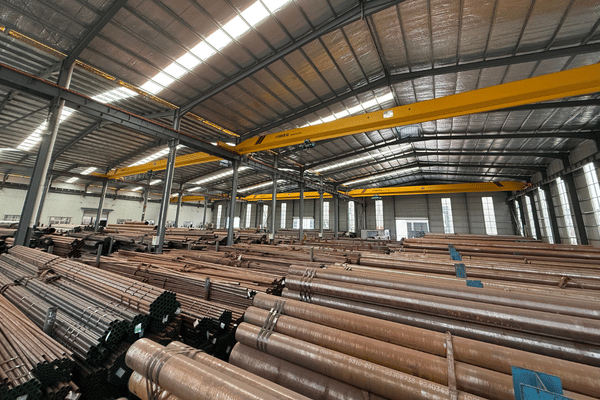
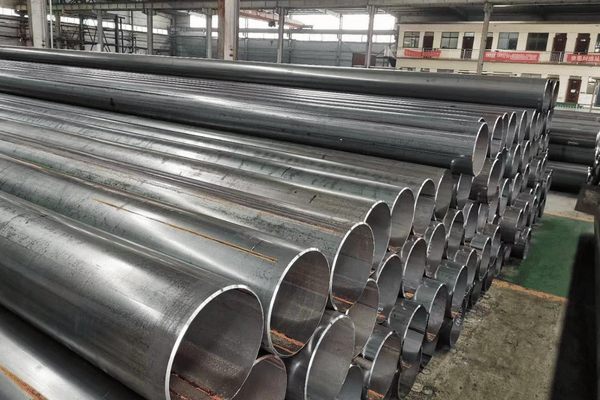
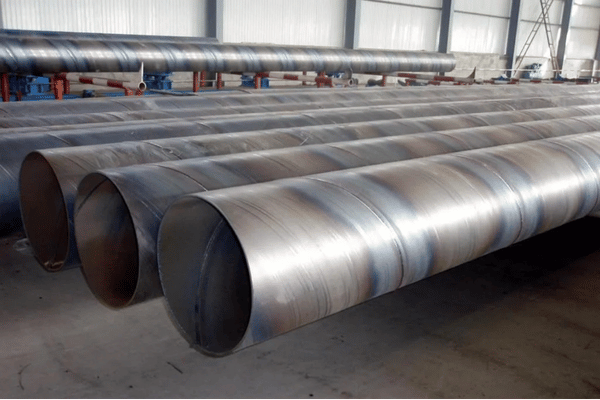
The API 5L product family comes in two levels of product specification: the lower strength-level PSL1 offers no minimums on Charpy impact energy testing or Non-Destructive Examination; while PSL2 demands improved chemistry, maximum tensile strength, carbon equivalent limits, individual pipe NDT, and also requires that some minimum average absorbed energy of the Charpy test is achieved — usually on the order of 41 J longitudinal / 27 J transverse across the larger size range. For critically loaded transmission lines PSL2 isn’t a product up-grade, it’s the prerequisite minimum standard of care.
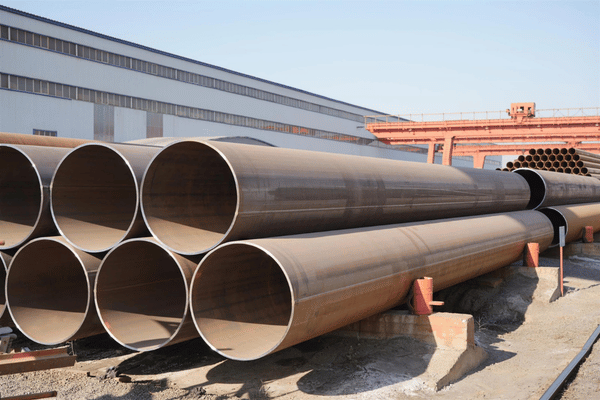
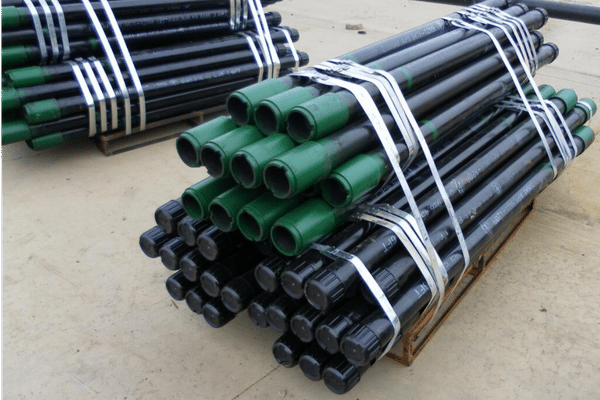
| Grade | Min yield | Sour (NACE MR0175) | Typical well |
|---|---|---|---|
| J55 / K55 | 379 MPa (55 ksi) | No | Surface casing, <2000 m, <35 MPa |
| N80-1 | 552 MPa (80 ksi) | No | Medium depth, 2000–3500 m |
| L80-1 | 552 MPa (80 ksi), ≤23 HRC | Yes — H₂S service | Sour / corrosive wells >2000 m |
| P110 | 758 MPa (110 ksi) | No | Deep, high-pressure, >3500 m |
Grade properties as prescribed in API Specification 5CT (international equivalent ISO 11960; sour-service metallurgy is an active patent field, e.g. WO2019180499A1). OCTG products are deployed in operating wellbore pressures typically up to about 15,000 psi as opposed to line pipes pressures of generally less than 1,000 psi; that differential is why our casings and fittings have its own specification group.
Synbase products are designed to operate in three environments where lot failure results in total plant shutdown, not a return. In the oil and gas sector, we run our OCTG and API 5L line pipe in transport of hydrocarbons under pressure from the wellbore to the plant site. In the power sector, SMLS boiler pipes and heat exchangers supply high pressure hot water/steam in the generation cycle. For infrastructure, large diameter SSAW and structural pipes facilitate transporting water and transmitting load. Each market has a core set of purchasers that rely on EPC contractors and NOCs’ specification criteria that include API 5L, API 5CT, ASTM and NACE MR0175 / ISO 15156 by clause.
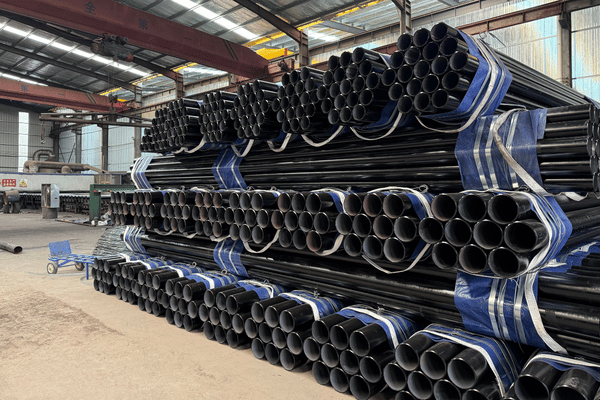
price + costs of installation, compliance, logistics, quality assurance plus total loss.
Typical structural rework as a share of total project cost — and it climbs to 15–20% when a project is awarded to the lowest bidder. On steel pipe, the cheapest quote frequently becomes the most expensive delivery.
An $18/ton “saving” produced roughly $860,000 of downstream impact — a 40:1 negative return.
The rejected re-inspection visit(s) by SGS/BV add the cost of $3,000-$5,000 plus additional leadtime to project time lines.
Most engineers who have sourced large volumes of load-bearing steel on the global market say they lose sleep worrying about quality rather than yield strengths. The risk is rarely the steel — it is the paperwork: a certificate that fails a third-party audit delays release, because the document and the metal stop matching, and a hidden re-inspection cost lands on a budget that never planned for it. The largest volume of claims this trade hears relate to the mill test report, which won’t pass muster in a third party audit. Fake certificate, mis-match in heat numbers versus packing list, slightly “off” certificates that hold up containers at customs, and traceability maps that do not align the metal with the shipment. A single mismatched record can hold a container 3 weeks at the port and add $3,000–$5,000 per re-inspection.
Synbase sees the quality documentation as an integral part of our product. We ensure every container is accompanied with an accurate MTR, including heat number, batch number, and Synbase lot number, thus the material can be traced to the melt and you (or your representative) can compare your sample results to the material documents prior to the container leaving port. Unlike a distributor that passes through a certificate an unrelated trader wrote, our MTRs trace to a Synbase-managed melt, whereas a pass-through cert only repeats what someone upstream typed — that is the honest test of a mill versus a middleman. Our operations are guided by ISO 9001, ISO 14001, and ISO 45001 management systems, and we carry the CE marking for the European market, and maintain active membership in the China Iron and Steel Association.
 // TRACE_MAP_01
For API products ask for the mill’s API monogram license and cross-check this on api.org’s API Composite List, status “Active”, grade, type and size match your item EXACTLY. API 5L and 5CT licenses are granted per product category and the credible supplier show you the licence line that corresponds to your item, not a global claim. We’ll provide this upon request, alongside our last surveillance-audit and the test-lab’s accreditation. Every finished line is released only after 100% ultrasonic and electromagnetic testing of its welds, and we retain the heat and inspection records for 5 years.
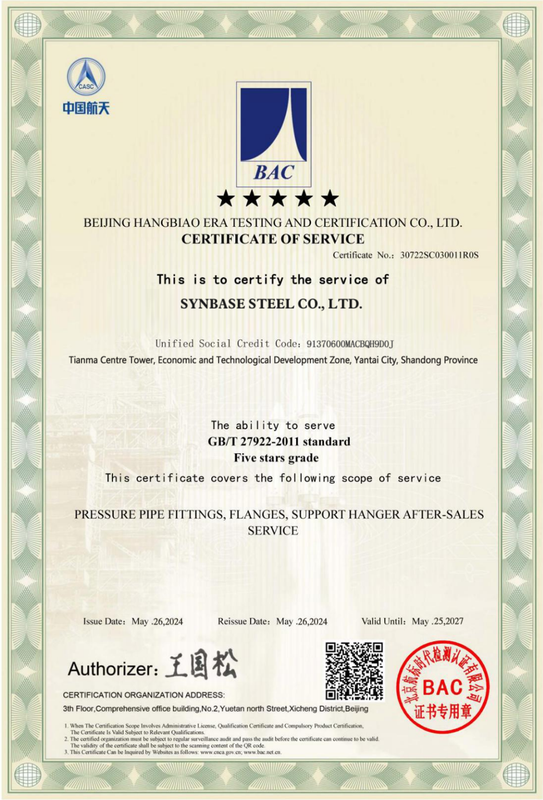
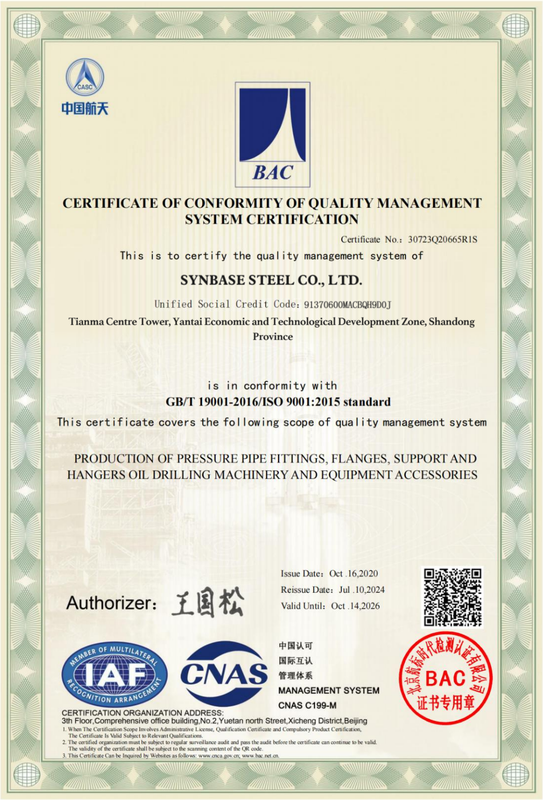
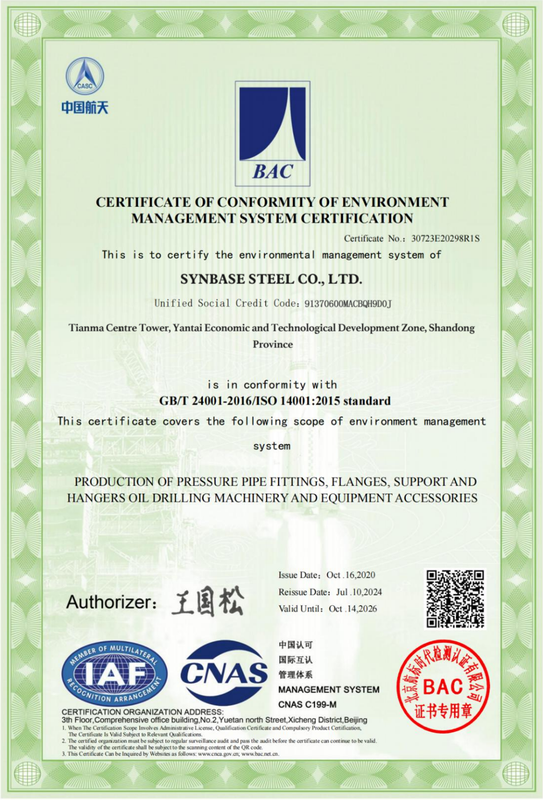
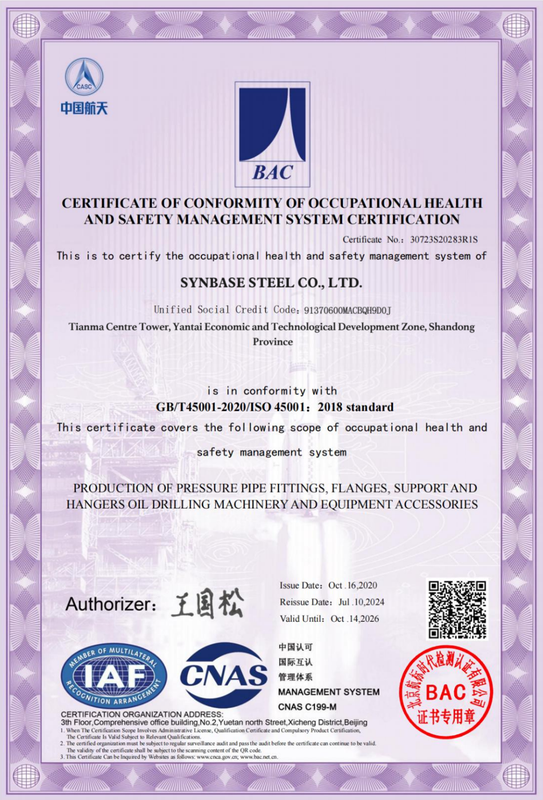
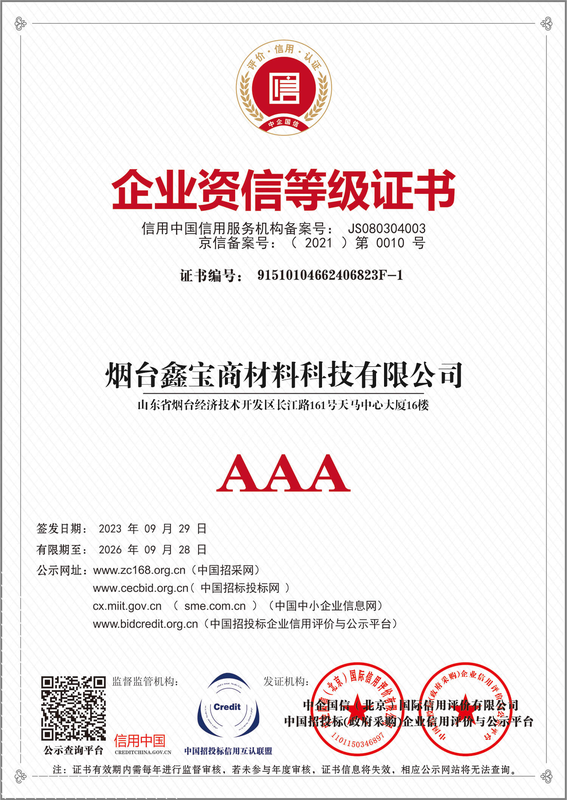
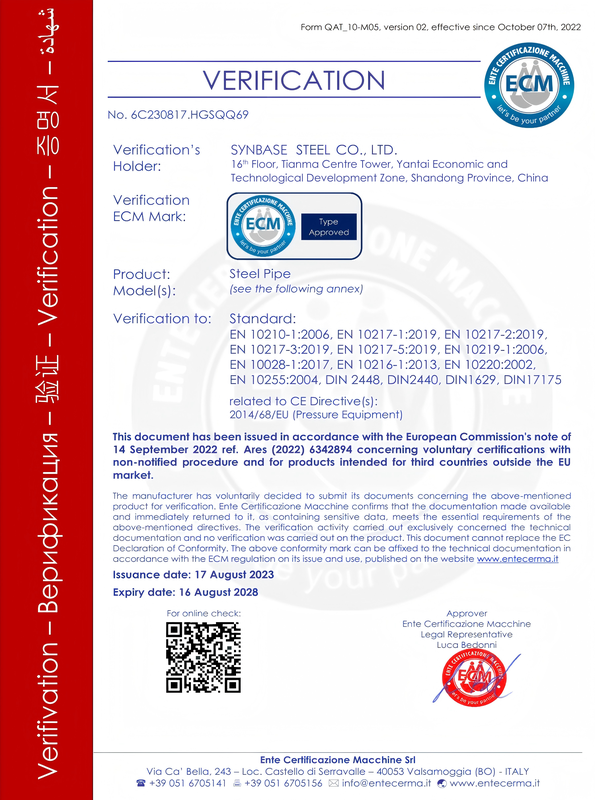
We don’t dispute a refused MTR – we prevent it. Each heat’s cert, marking and packlist is checked off line item by line item versus the PO before any steel leaves the mill – as most release hold-ups come from a missing piece of paper – not a piece of metal.
Get Instant QuoteEnergy-grade buyers we partner with place reliability above price and we put specification, certifications and delivery times ahead of upfront cost – because they’ve all experienced a 20% below-market quote that arrived with shipping held up for 3 weeks at port due to a missing record. Or an order specified and paid for as 9 containers arrived as 12. Unlike a price-list distributor, we quote the whole landed picture, whereas a bare unit price hides where the cost actually lands. Here’s how our Synbase price and timeline breaks down in real-terms and so you can compare apples to apples.
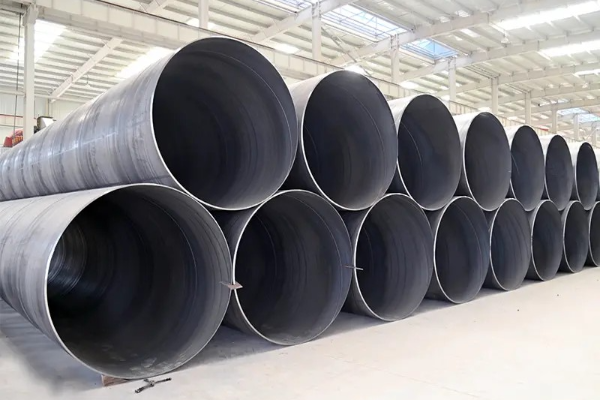
The whole group, from the production, through processing, warehousing, transit to sales are in one integrated system, we quote the whole picture from start to finish – not just the steel, and our sales, logistics, and engineering departments remain with the order through out fabrication, inspection, and post-sale support. With major global warehousing and transit facilities operated by the parent group, we keep large volumes of standard grades and dimensions in inventory so that repeat customers have the flexibility to reduce order cycle lead time rather than re-starting from raw billet each time. Send us your specification and destination and we will prepare a binding quotation with price, lead time, and MOQ, traceable to our ISO 9001-certified quality system.
Match API 5CT casing and tubing steel grades to specific well depths, environmental pressures, and sour service corrosion requirements.
Instantly compute precise theoretical linear weights, volumes, and dimensions for carbon and alloy steel pipes.
Evaluate and determine the optimal manufacturing methods—Seamless, ERW, or LSAW—based on structural and transmission project demands.
The diameter range possible, and also the possible pressure classes, will be predetermined by this choice.